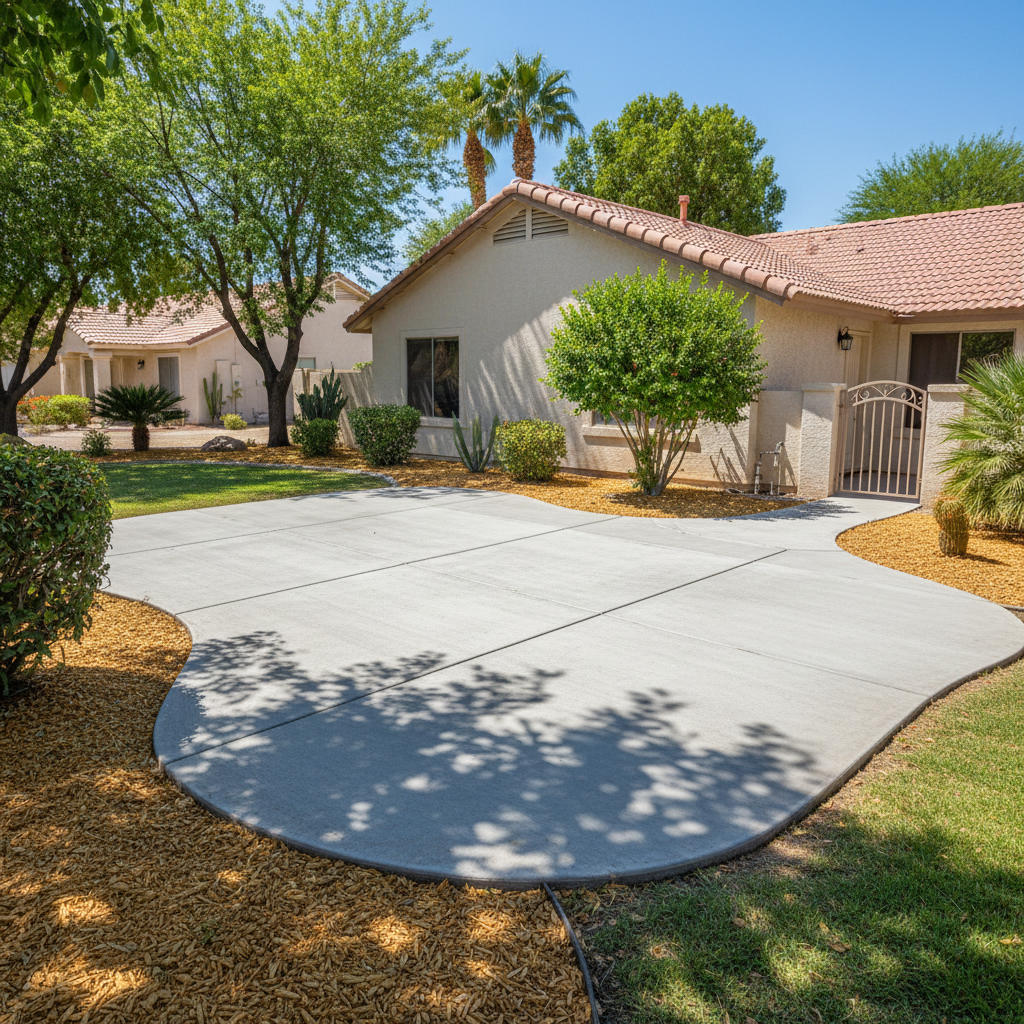
So, you're gazing at your yard, maybe picturing a brand-new patio or a spruced-up driveway, and you find yourself asking, "When's the absolute best time to pour concrete right here in Laveen?" That's a fantastic question, and honestly, getting the timing right is super important in our one-of-a-kind desert climate. Pouring concrete isn't like whipping up a batch of cookies; you can't just do it whenever and expect everything to turn out perfectly. The weather here in Laveen Village, with its scorching summers and mild winters, really dictates how well your concrete sets and how long it'll actually last.
When to Get Your Concrete Project on the Schedule
Let's talk about the clock. In Laveen, we really need to be smart about when we plan concrete work. You might think summer is perfect because it's so warm, but that's actually when things get a bit tricky. The intense heat we deal with, especially from May through September, can be a real headache for fresh concrete.
- Spring (March-April) and Fall (October-November) are usually your best bets. These seasons bring those ideal temperatures — typically between 50 and 70 degrees Fahrenheit — that concrete just loves. This allows the concrete to cure at a nice, steady pace, which is vital for its strength and for keeping those annoying cracks from showing up.
- Early mornings during the warmer months can also work out. If you're pushing into late spring or early fall, scheduling the pour for the very early hours helps you dodge the day's peak heat. This gives the concrete a head start on setting before the sun truly starts to beat down.
- Winter (December-February) can be an option too. Our winters here are generally pretty mild, with daytime temperatures often hanging out in the 50s and 60s. This can be a good window for exterior concrete, but you still have to keep an eye out for any unexpected cold snaps that might dip below 40 degrees.
Weather Conditions That Really Matter for the Job
It's not just about the season, you know? The specific weather conditions on the day of the pour and the days right after are absolutely critical. We're living in a desert, so here's what we're always watching closely:
Heat and Sun
This is our biggest hurdle. High temperatures and direct sunlight make concrete dry out way too fast. When concrete loses its moisture too quickly, it just doesn't cure properly. That can lead to a weaker slab and those frustrating plastic shrinkage cracks. That's why Kingdom Concrete Laveen always takes precautions, like dampening the sub-base, using cooler mixing water, and sometimes even putting up temporary shade structures. We really have to control that curing process, especially with our Laveen soil, which can be expansive clay in some spots. Without proper curing, that combination can lead to premature cracking or heaving, and nobody wants that.
Humidity and Wind
In Arizona's low humidity, concrete can dry out super quickly. Throw some wind into the mix, and you've got a recipe for accelerated evaporation. Wind can strip moisture right off the surface, causing the same cracking problems as extreme heat. That's why we might use windbreaks or apply curing compounds right after finishing to lock that moisture in tight.
Rain
Now, we don't get a ton of rain, especially outside of monsoon season, but any significant rainfall on fresh concrete is a definite no-go. You really need at least 48 hours of dry weather after a pour. Too much water can weaken the concrete and wash away essential chemicals it needs for strength.
Keeping Your Concrete Investment Safe All Year
Once your concrete is in place, the job isn't over. Protecting it from our tough Laveen environment is key to making it last. Here’s how:
Sealing Is a Must-Do
I can't emphasize this enough. Sealing your concrete is one of the smartest things you can do. Our intense UV rays and wild temperature swings can make concrete crack, fade, and just generally fall apart faster than in other places. A high-quality, UV-resistant sealer protects against sun damage, keeps moisture out, and helps bounce back those harsh UV rays. You should plan on resealing every 2-3 years, depending on how much traffic it gets and how exposed it is.
Clean It Regularly
Laveen dust and dirt can build up and stain your concrete. Regular sweeping and an occasional wash with mild detergent will keep it looking sharp. If you get oil or grease stains, deal with them right away. But be careful — avoid harsh chemicals, as they can actually damage the surface.
Fix Cracks Quickly
Even with the best installation and protection, small cracks can sometimes pop up. Don't just ignore them. Filling minor cracks with a concrete patch or filler stops them from getting bigger and prevents water from sneaking in and causing even worse problems.
Good Drainage Matters
Make sure water flows away from your concrete surfaces and, importantly, away from your home's foundation. Standing water can undermine the sub-base and lead to issues like settling or cracking. Proper grading around your property is essential, and it's something Kingdom Concrete Laveen always thinks about during installation.
Getting your concrete project done right in Laveen truly means understanding our local climate. By picking the perfect time for installation and committing to year-round protection, you'll make sure your investment stands strong against that Arizona sun for many, many years to come.